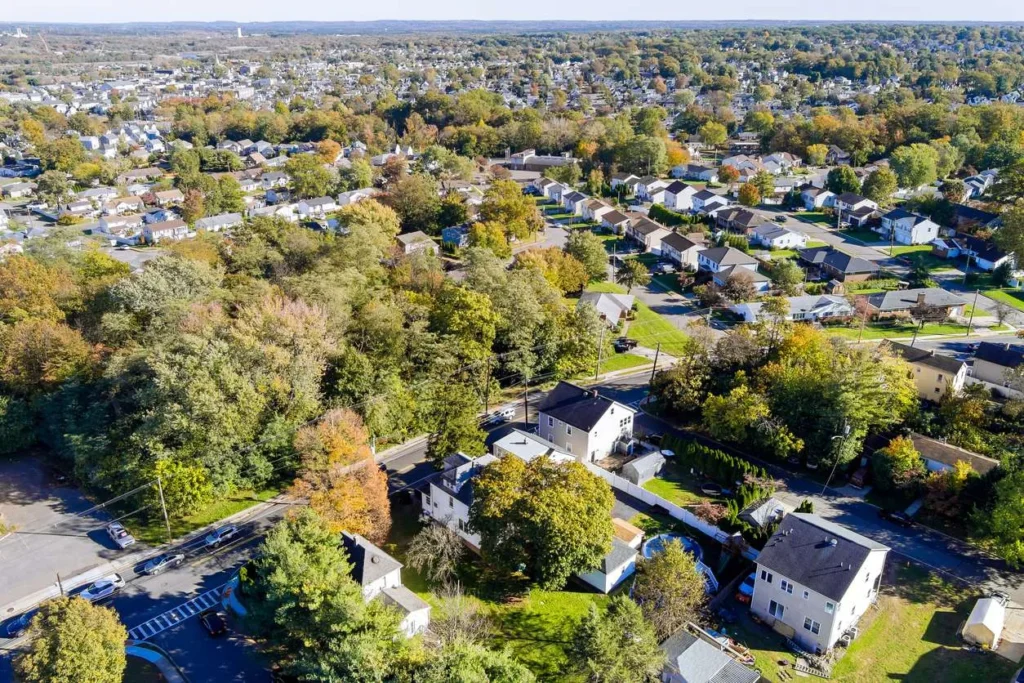
Teaneck is Bergen County’s quintessential family suburb — established residential neighborhoods, well-known school district, walkable downtown, and one of the most demographically diverse communities in North Jersey. The township’s housing stock is a mix of pre-war homes from the 1920s and 1930s and postwar homes from the 1940s through the 1960s, and much of it is hitting the same aging-out window on roofs, gutters, and siding across most of the community’s homes. This guide covers what Teaneck homes need for roofing, gutters and siding.
Here’s the local homeowner’s guide for roofing, gutter, and siding work in Teaneck — what’s specific to the township’s housing generation, what to check on your home, and how to work with Teaneck’s specific character. From a licensed New Jersey general contractor that runs residential structural work across Teaneck and the rest of Bergen County.
Why Teaneck Homes Are Aging Out Together
Teaneck grew in two main waves: Tudors and colonials in the 1920s and 1930s, then Cape Cods, ranches, and split-levels in the postwar decades. Most residential streets mix homes from one or both of those eras.
- Median home age is high. Most Teaneck homes were built before 1970, and many before 1940. That housing is now roughly 55 to 100 years old.
- Original roofs long since replaced. Second-generation and third-generation asphalt shingle roofs are common. Third-generation is now aging out for homes on tighter replacement cycles.
- Original gutters are almost always gone. 1990s and 2000s replacement aluminum gutters are now themselves reaching end of service life.
- Aluminum siding boom era. Late 1970s and 1980s aluminum siding installations across Teaneck are showing wear — chalking, oxidation, dents, seams pulling apart.
- Vinyl siding wave. Late 1990s and 2000s vinyl re-siding is now 20–25 years old — brittle panels, fading, storm damage vulnerability.
- Established landscape. Mature oaks, maples, and pines across Teaneck neighborhoods mean heavier leaf loads on gutters and more branch-impact risk on roofs.
The practical implication: Older Teaneck homes commonly need attention on all three exterior systems within a similar window. Coordinating them saves money and reduces disruption.
The Township of Teaneck website covers construction office contacts and permit requirements. The Bergen County government website provides broader consumer protection resources.
Teaneck Neighborhood Character
- West Teaneck. Established residential, mature landscape, mix of ranches and split-levels.
- East Teaneck. Residential with historic character in older sections. Some Colonial-era and pre-war homes near Teaneck Creek.
- North Teaneck (near the New Milford / Bogota borders). Newer residential stock in parts, established family neighborhoods.
- Cedar Lane / Queen Anne Road corridor. Walkable downtown-adjacent residential.
- Holy Name Medical Center area. Housing serving the healthcare workforce; older single-family stock.
- Fairleigh Dickinson University neighborhoods. Faculty and student housing mixed with established residential.
Working With Teaneck Township Permits
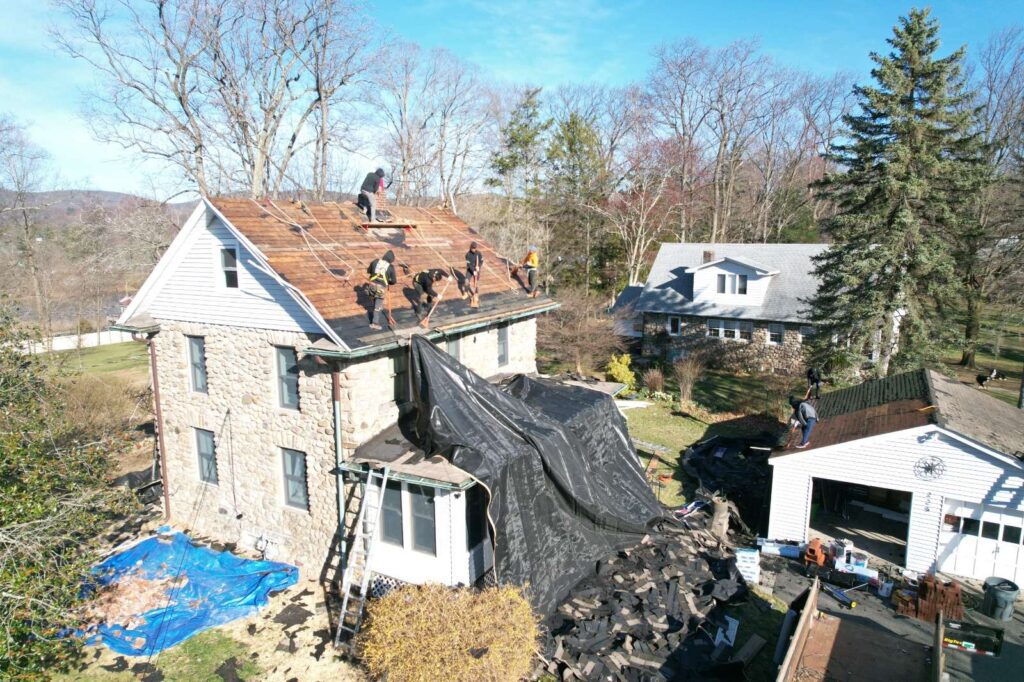
- Roof replacement typically requires a permit. Same-material re-roofing may or may not — depends on scope. Check with the township construction office before work begins.
- Structural changes always require a permit and often plan review.
- Siding replacement usually doesn’t require a permit for like-for-like replacement, but material changes (from aluminum to vinyl, or vinyl to fiber cement) may require notification.
- Gutter replacement is typically permit-free.
- Inspection scheduling. Teaneck construction inspectors have specific availability windows. Real contractors coordinate these before starting work.
A licensed local contractor knows the Teaneck permit process. Work started without the required permits can leave a homeowner with code violations. Verify permit knowledge as part of your vetting.
What to Check on Teaneck Homes This Year
Roof
- Age of current shingles (installation date)
- Visible missing, curled, or lifted shingles
- Roof valleys — debris accumulation and staining
- Ridge cap condition
- Chimney flashing (older chimneys often have aging flashing)
- Attic — daylight visible through the deck, wet insulation, staining
- Ground below eaves — granule accumulation indicates surface wear
Our post on 5 signs your roof needs replacement covers the diagnostic in detail.
Gutters
- Age of current gutter installation
- Sag, separation, or gaps between sections
- Downspout condition and connection
- Splash blocks properly directing water away from foundation
- Fascia condition — this is where old gutters cause hidden damage
- Basement or foundation area moisture (secondary damage from bad gutters)
Siding
- Material — aluminum (1970s–80s), vinyl (1990s–2000s), fiber cement (newer)
- Visible warping, buckling, or panel separation
- Chalking (aluminum) or fading (vinyl)
- Impact damage from windborne debris
- Trim, corners, and window/door transitions
- Any signs of water intrusion into wall assemblies
Our post on when siding needs replacement walks through the material-specific decision criteria.
Bundling Roof, Gutter, and Siding Work Together
For older Teaneck homes hitting the aging-out window on all three systems, bundling has real advantages:
- Single contractor, single scope, single warranty. Coordinating three separate contractors on three separate schedules is a project management burden most homeowners underestimate.
- Roof replacement usually damages gutters. Coordinating gutter replacement with roof replacement is cheaper than doing them separately. Our post on replacing gutters when you replace your roof covers when the bundle math works.
- New siding around old roof edges creates transition problems. Doing siding before or after roofing without coordination causes flashing and drip-edge issues.
- Single dumpster, single crew mobilization, single cleanup. Real project overhead savings.
- One insurance conversation if storm damage triggered any of the work.
If Storm Damage Started the Conversation
Bergen County storms hit Teaneck too. Mature-tree density means falling branches cause real roof and gutter damage. Our Bergen County storm response trilogy covers the first 48 hours:
- Roof storm damage — first 48 hours
- Gutter storm damage — first 48 hours
- Siding storm damage — first 48 hours
Choosing a Contractor in Teaneck After a Storm
A knock on the door or an offer of a free inspection is not a warning sign by itself; Nuvista offers free inspections too. What matters is how a contractor does business. Watch for:
- Pressure to sign right away. A same-day discount, a “today only” price, or a contract pushed on you before you have had time to compare estimates.
- Missing credentials. No verifiable New Jersey Home Improvement Contractor registration, no certificate of insurance, or no business address you can confirm.
- Unclear pricing or scope. No written, itemized estimate showing the work, the materials, the price and the payment schedule.
- Requests to sign over your claim or pay everything up front. An Assignment of Benefits before you have an itemized estimate, or full payment before the work starts.
- No familiarity with local requirements. A contractor should be able to explain how permits and inspections work with Teaneck’s construction office.
Fall Prep for Teaneck Homes
Many Teaneck homeowners plan structural exterior work for the stretch between summer heat and first freeze. Our Bergen County fall roof prep guide covers the seasonal checklist. Teaneck-specific timing:
- Mature-tree neighborhoods drop leaves later — schedule gutter cleaning after the main leaf drop
- Older chimneys benefit from fall flashing inspection before winter ice damming
- Aging siding evaluation before winter freeze locks in maintenance needs
Bergen County Hub Content
- Bergen County general contracting hub
- Paramus roofing, gutters, and siding guide
- Hackensack roofing, gutters, and siding guide
- Ridgewood estate roofing guide
- Fort Lee roofing guide
Local Teaneck Structural Exterior Response
If you own a Teaneck home and need a real evaluation on roofing, gutters, siding, or the full exterior, Nuvista runs bundled residential structural work across Teaneck, the rest of Bergen County, and surrounding counties. We’re a licensed New Jersey general contractor with real insurance, real Bergen-area presence, and experience with Teaneck’s pre-war and postwar housing and township permit process.
We handle residential roofing, gutter installation and replacement, and siding installation as bundled scope when it makes sense — which for older Teaneck homes often does.
Request a free estimate and we’ll come out, do a real inspection, and put together a written scope with permit, timeline, and material details.