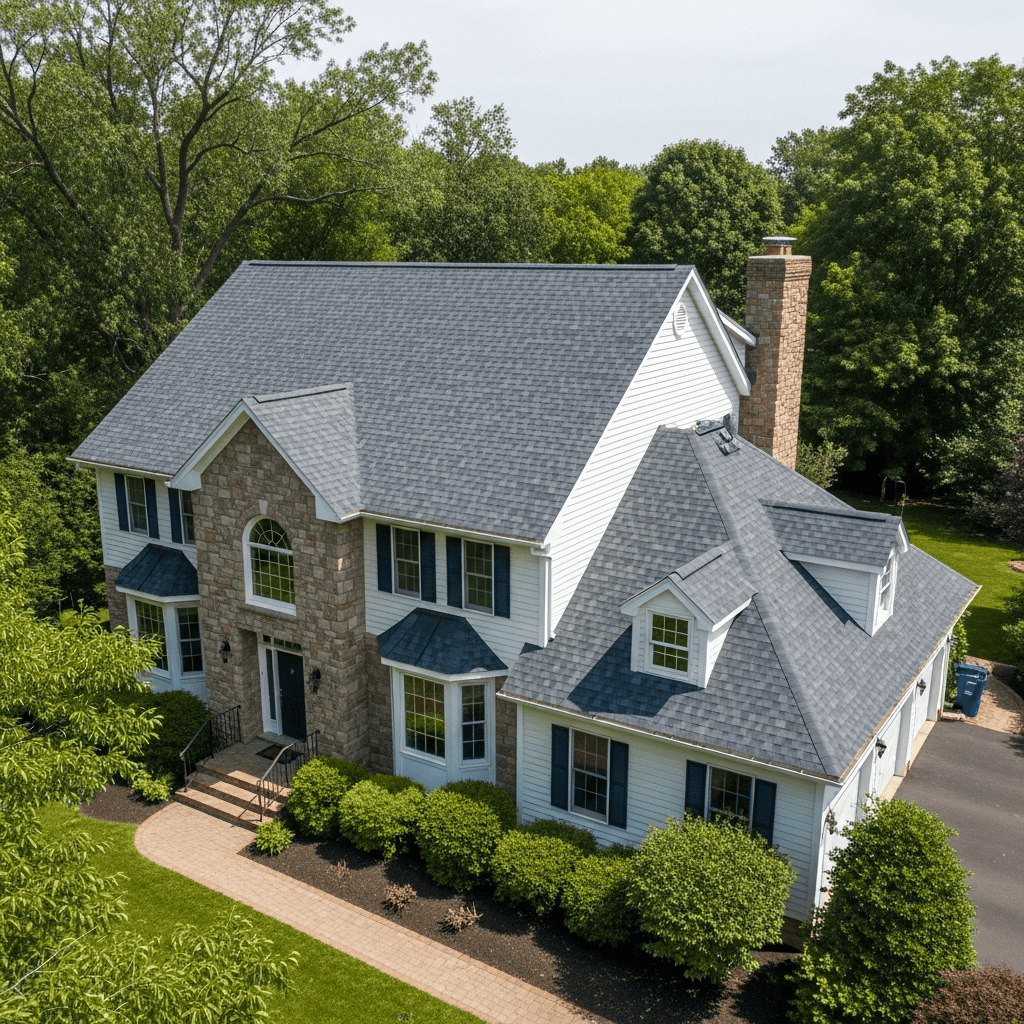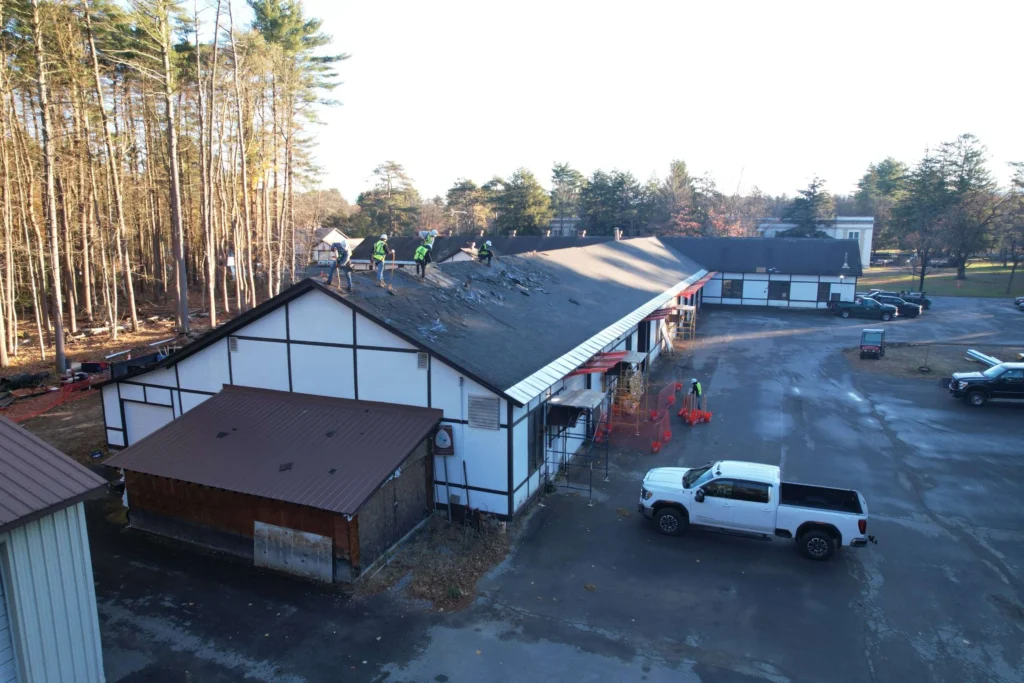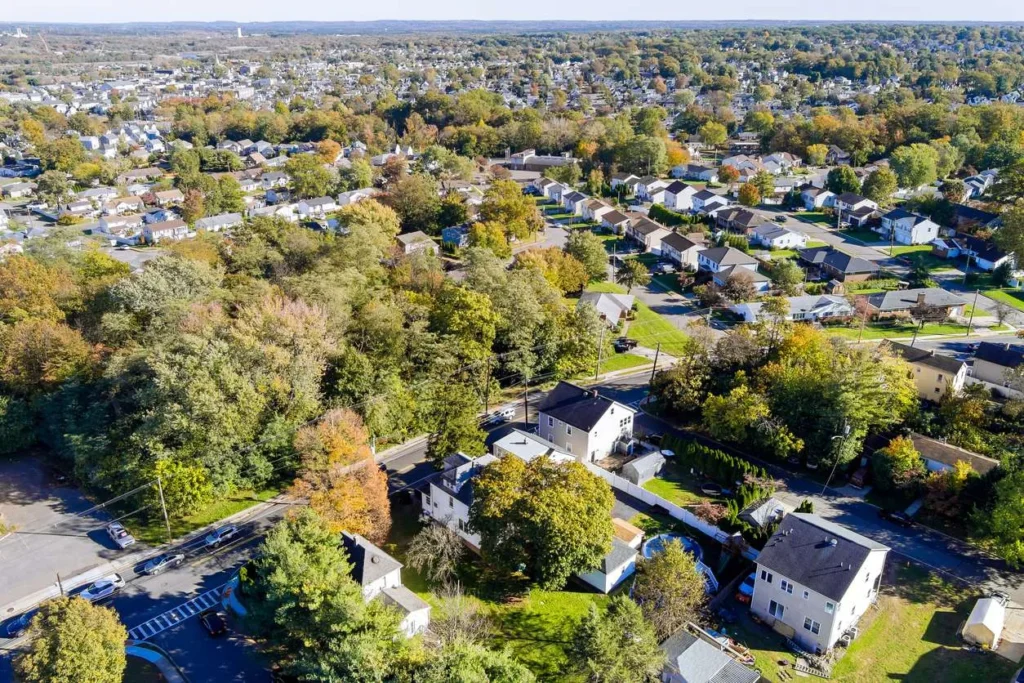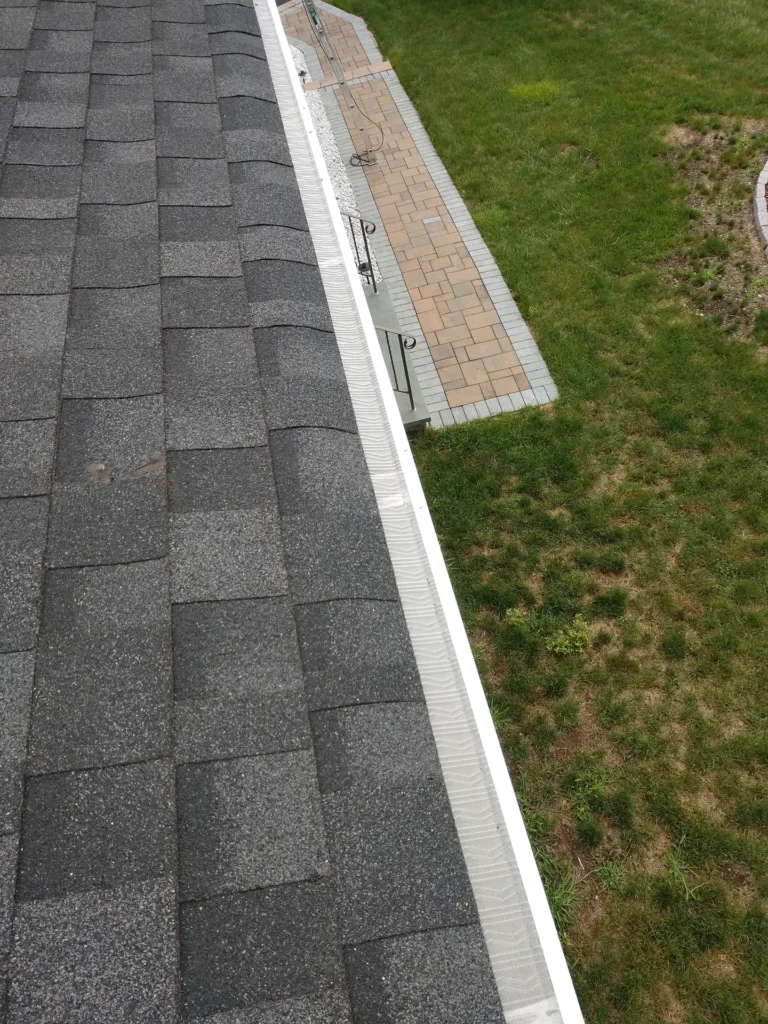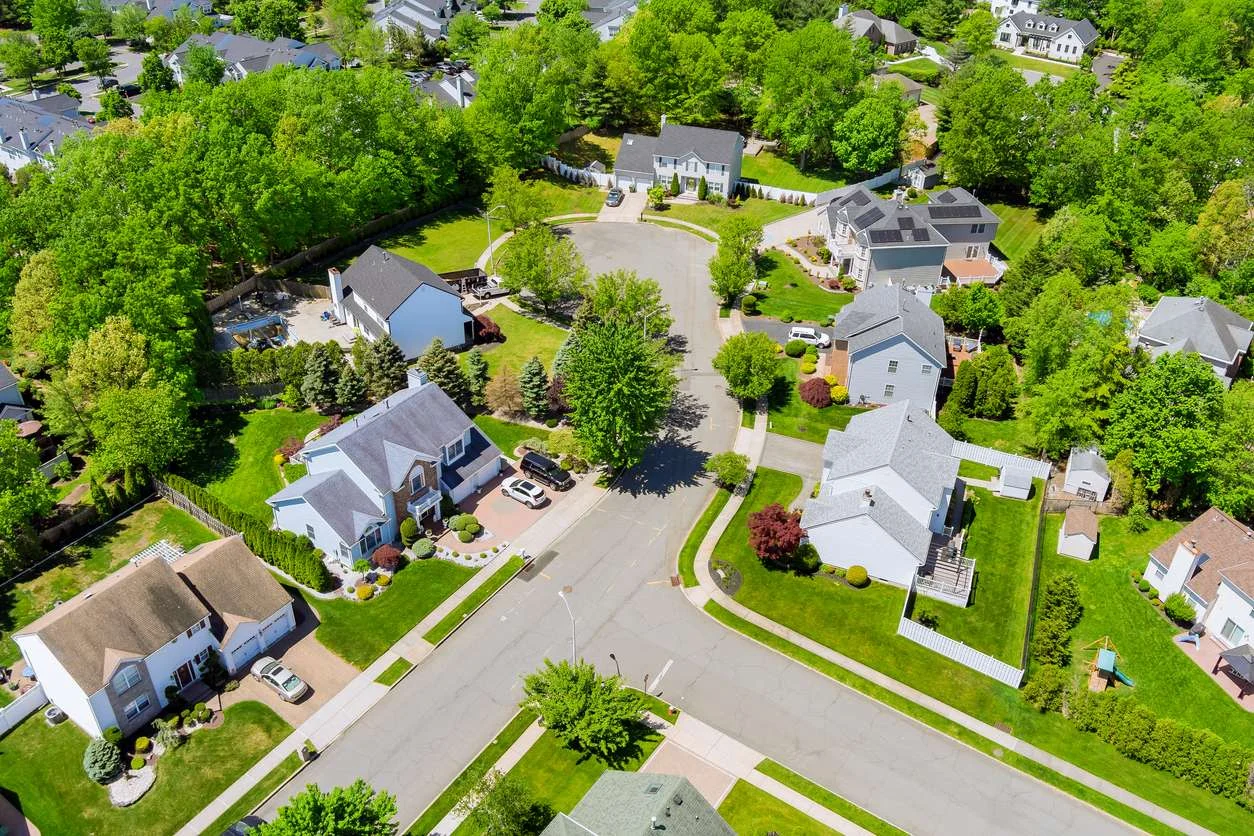
Ridgewood is Bergen County’s established old-money suburb. Turn-of-the-century Colonials with original slate roofs. Victorian estates with copper flashing and wooden clapboard siding. Postwar estate homes with expanded architectural details. New construction on rare infill lots. Every housing generation has its own structural exterior story, and Ridgewood’s mature landscape (established oaks, tall pines, dense hedge rows) makes roof, gutter, and siding wear happen faster and more visibly here than in newer Bergen suburbs. This guide covers what Ridgewood homes need for roofing, gutters and siding.
Here’s the local homeowner’s guide for structural exterior work in Ridgewood — what’s specific to estate homes, what to check on your property, and how to work with Ridgewood’s specific character. From a licensed New Jersey general contractor that runs residential structural work across Ridgewood and the rest of Bergen County.
Ridgewood’s Housing Generations
Historic Victorian and Colonial (Late 1800s–Early 1900s)
Ridgewood’s original residential neighborhoods still have significant Victorian and Colonial housing stock. Structural exterior scope for these homes requires specialty attention:
- Slate roofs. Original slate roofs on Ridgewood Victorians commonly last 100+ years. Repair (not replacement) is often the right answer — but requires slate specialists who work with historic materials.
- Copper flashing and gutters. Original copper systems on some homes. Character preservation vs. modern aluminum is a real decision.
- Wooden clapboard, shake, or fish-scale siding. Original wood siding requires ongoing paint or stain cycles. Not swap-and-forget.
- Turret and dormer complexity. Victorian rooflines have multiple valleys, dormers, and turret elements. More surface area, more flashing complexity, more failure points.
- Historic character considerations. Ridgewood doesn’t have formal historic district restrictions in most neighborhoods, but character preservation matters for resale value.
Established Estate (1920s–1970s)
The bulk of Ridgewood residential stock. Larger estate homes on established lots with expanded architectural detail. These homes have hit multiple roof and siding cycles already:
- Original slate or clay tile roofs on some properties; asphalt shingle on others (multiple generations replaced by now)
- Aluminum siding from 1970s-80s; vinyl siding from 1990s-2000s common as later re-siding
- Copper gutters on some, aluminum on most (original copper systems long since replaced)
- Multiple chimneys with aging flashing systems
- Attached and detached garages, pool houses, guest cottages with their own exterior scope
Modern and New Construction
Rare infill construction and select modernizations bring newer systems into the mix:
- Architectural dimensional asphalt shingles with 25-30 year warranties
- Aluminum, PVC, or copper gutters with modern hanger systems
- Fiber cement, engineered wood, or premium vinyl siding
- Modern flashing and ice-and-water membrane systems
- Solar array integration on select modern estate builds
Ridgewood-Specific Considerations
- Complex rooflines. Ridgewood estates have some of the most architecturally complex rooflines in Bergen — multiple slopes, valleys, dormers, turrets, chimneys. More surface area, more failure points, more expertise required.
- Mature-tree density. Established oaks and pines create real gutter debris loads and real branch-impact risk during storms. Roof valleys in Ridgewood clog faster than in newer subdivisions.
- Established landscape restoration expectations. Estate homeowners expect landscape to be treated carefully during roof or siding work. Vendors who don’t understand mature landscape damage repair aren’t a fit.
- Village-specific permit process. Ridgewood’s building department has specific procedures — different from surrounding boroughs. Real vendors know the process.
- Preservation-friendly repair preference. Many Ridgewood estate homeowners prefer restoration and repair over full replacement to preserve character.
- High resale value area. Structural work quality affects resale directly at Ridgewood price points. Cheap fixes cost more at sale time than they save at repair time.
The Village of Ridgewood website covers local building department contacts and permit requirements. The Bergen County government website provides broader consumer protection resources.
What to Check on Ridgewood Homes This Year
Roof
- Material — slate, tile, or asphalt (age of current installation)
- Visible damage: missing slate, cracked tile, missing/curling shingles
- Roof valleys — debris accumulation, moss growth, staining
- Turret, dormer, and chimney flashing condition
- Ridge cap condition
- Attic — daylight visible through the deck, wet insulation, staining
- Ground below eaves — slate fragments or shingle granules
Our post on 5 signs your roof needs replacement covers general diagnostic. For material-specific considerations, our metal vs. asphalt shingles post compares long-life options for eventual replacement.
Gutters
- Material — copper (historic), aluminum, half-round vs. K-style
- Age and condition
- Sag or separation especially at gutter turns (complex rooflines mean more turns)
- Downspout function (run a hose to test)
- Splash blocks and underground drainage where applicable
- Fascia and soffit condition
Our post on replacing gutters when you replace your roof covers the bundle math for estate roof/gutter projects.
Siding
- Material — wood (historic), aluminum, vinyl, fiber cement, brick, stone
- Paint or stain condition on wooden siding (most Ridgewood historic homes)
- Chalking or oxidation on aluminum
- Fading, warping, or cracking on vinyl
- Trim, corners, water tables, and window/door transitions
- Mortar joint condition on brick/stone (estate homes often have masonry accents)
Our post on when siding needs replacement walks through material-specific diagnostic criteria.
Bundling Roof, Gutter, and Siding on Ridgewood Estates
Estate-scale bundling has different considerations than postwar suburban homes:
- Preservation coordination. Bundling means one contractor makes all the character-preservation calls consistently. Different vendors handling different systems create inconsistent aesthetic outcomes.
- Landscape protection. Estate landscape is expensive to restore. One contractor managing all exterior work coordinates landscape protection through a single project plan.
- Historic material sourcing. Slate, copper, or historic wood siding require specialty sourcing with lead times. One vendor coordinating all materials avoids scheduling conflicts.
- Complex-roofline coordination. Turrets, dormers, and multi-slope rooflines require the same crew maintaining consistent approach across roof and adjacent siding.
- Single dumpster placement. Estate lots often have specific dumpster placement requirements (protecting landscape, coordinating with garages).
- One permit conversation. Ridgewood building department appreciates comprehensive project submittals over piecemeal.
If Storm Damage Started the Conversation
Ridgewood’s mature-tree density means storms hit Ridgewood harder than newer subdivisions — falling branches cause real roof and gutter damage. Our Bergen County storm response trilogy covers the first 48 hours:
- Roof storm damage — first 48 hours
- Gutter storm damage — first 48 hours
- Siding storm damage — first 48 hours
Ridgewood-specific storm consideration: cracked or damaged historic slate and original copper can’t always be replaced with modern equivalents without disrupting character. Real preservation-friendly repair requires vendors who understand historic material sourcing.
Choosing a Contractor in Ridgewood After a Storm
A knock on the door or an offer of a free inspection is not a warning sign by itself; Nuvista offers free inspections too. What matters is how a contractor does business. Watch for:
- Pressure to sign right away. A same-day discount, a “today only” price, or a contract pushed on you before you have had time to compare estimates.
- Missing credentials. No verifiable New Jersey Home Improvement Contractor registration, no certificate of insurance, or no business address you can confirm.
- Unclear pricing or scope. No written, itemized estimate showing the work, the materials, the price and the payment schedule.
- Requests to sign over your claim or pay everything up front. An Assignment of Benefits before you have an itemized estimate, or full payment before the work starts.
- No familiarity with local requirements. A contractor should be able to explain how permits and inspections work with Ridgewood’s building department.
- No slate or historic-material experience for estate work, even if the contractor’s general roofing credentials are real.
Fall Estate Prep
Fall is the highest-leverage maintenance window for Ridgewood estates. Mature landscape means heavier debris loads earlier than most Bergen towns. Our Bergen County fall roof prep guide covers the seasonal checklist. Ridgewood-specific timing:
- An early-fall inspection suits estate homes, leaving time to source specialty materials before cold weather
- Gutter cleaning after the main leaf drop
- Slate roof inspection before freeze cycles — slate is sensitive to freeze-thaw damage
- Historic copper gutter inspection — patina should be uniform; localized damage indicates issues
- Wooden siding paint/stain evaluation before winter locks in maintenance needs
Ridgewood vs. Other Bergen Estate Suburbs
- vs. Paramus: Different housing generation entirely. Paramus is postwar residential; Ridgewood is established historic + estate. Our Paramus roofing guide covers the postwar aging pattern.
- vs. Hackensack: Hackensack has three housing generations mixed together (historic downtown, postwar residential, new construction). Ridgewood is more purely established estate. Our Hackensack guide covers the mixed-generation pattern.
- vs. Franklin Lakes: Franklin Lakes is newer luxury (larger lots, more modern construction). Ridgewood is older, more historic character, more preservation-focused.
- vs. Wyckoff, Ho-Ho-Kus: Similar established Bergen character but Ridgewood has denser village center and more architectural complexity.
Bergen County Hub Content
- Bergen County general contracting hub
- Paramus roofing, gutters, and siding guide
- Hackensack roofing, gutters, and siding guide
- Bergen County fall roof prep
Local Ridgewood Structural Exterior Response
If you own an estate home in Ridgewood and need a real evaluation on roofing, gutters, siding, or the full exterior — including historic material work — Nuvista runs bundled residential structural work across Ridgewood, the rest of Bergen County, and the surrounding counties. We’re a licensed New Jersey general contractor with real insurance, real Bergen-area presence, and experience with Ridgewood’s mix of historic estates, established residential, and modern construction.
We handle residential roofing, gutter installation and replacement, and siding installation as bundled scope for estate-scale properties — with landscape protection, historic material sourcing, and preservation-friendly approach built into the standard process.
Request a free estimate and we’ll come out, do a real inspection, and put together a written scope with permit, timeline, material sourcing, and landscape protection details.