When a nor’easter rolls off the coast or a summer thunderstorm tears across Bergen County, the damage rarely waits for daylight. You wake up to shingles in the yard, a wet spot on the ceiling, or a neighbor pointing at your gutters, and the questions start piling up. Do you climb up and look? Do you call the insurance company first, or a roofer? What if the adjuster lowballs the estimate? This roof damage insurance claim guide walks you through it, step by step.
This guide walks you through the seven steps we recommend to every Bergen County homeowner filing a roof damage insurance claim. It is written for the towns we work in every week – Paramus, Hackensack, Ridgewood, Fort Lee, Teaneck, Englewood, Bergenfield, Fair Lawn, and Cliffside Park – and it is practical guidance, not legal advice. If your situation is complicated, confirm the details with your carrier or a licensed professional.
Step 1: Make Sure Everyone Is Safe Before You Do Anything Else
Before you think about photos, phone calls, or paperwork, take a breath and check the basics. Is anyone inside the home hurt? Are there active leaks near light fixtures, ceiling fans, or the electrical panel? If water is dripping onto anything electrical, shut power to that circuit at the breaker and keep everyone clear of it.
Outside, look up before you walk out. Downed power lines, hanging branches, and loose flashing can all fall the minute the wind shifts again. Do not climb onto a wet or damaged roof, and do not send a family member up there either. Insurance companies will never require you to put yourself in danger to document a claim – that is what adjusters and contractors are trained for. A drone, a phone camera on a long selfie stick, or a good pair of binoculars from the ground will do the job.
Step 2: Document Everything Before You Touch a Thing
The single most common mistake we see on Bergen County claims is homeowners cleaning up too quickly. A well-meaning family member drags shingle debris to the curb, patches a soffit, or hoses down the driveway – and now the visible evidence of the storm is gone. Insurance adjusters rely on what they can see and photograph, so your job in the first 24 hours is to preserve the scene.
- Take wide shots of every side of the house from the ground, then close-ups of any visible damage – missing shingles, dented gutters, bent flashing, torn siding, cracked skylights.
- Photograph interior damage too: ceiling stains, drywall bubbles, wet insulation in the attic, water in light fixtures.
- Capture debris in the yard exactly where it landed. Shingle granules in the gutter or on the driveway matter for hail claims.
- Note the date, time, and weather conditions. A quick screenshot of the National Weather Service report for that storm is a strong supporting document. You can pull local storm reports directly from weather.gov.
- Save any video from doorbell cameras, security systems, or a neighbor’s phone.
Back everything up to cloud storage the same day. Phones get dropped, SD cards fail, and losing your only copy of the evidence is a headache you do not need.
Step 3: Stop the Damage From Getting Worse (Without Doing a Real Repair)
Most homeowner’s policies ask you to make reasonable efforts to prevent additional damage after a covered loss. That usually means tarping an open section of roof, covering a broken window, or moving furniture out of a leaking room. It does not mean starting a permanent repair before the adjuster has seen the damage – permanent work done too early can complicate your claim.
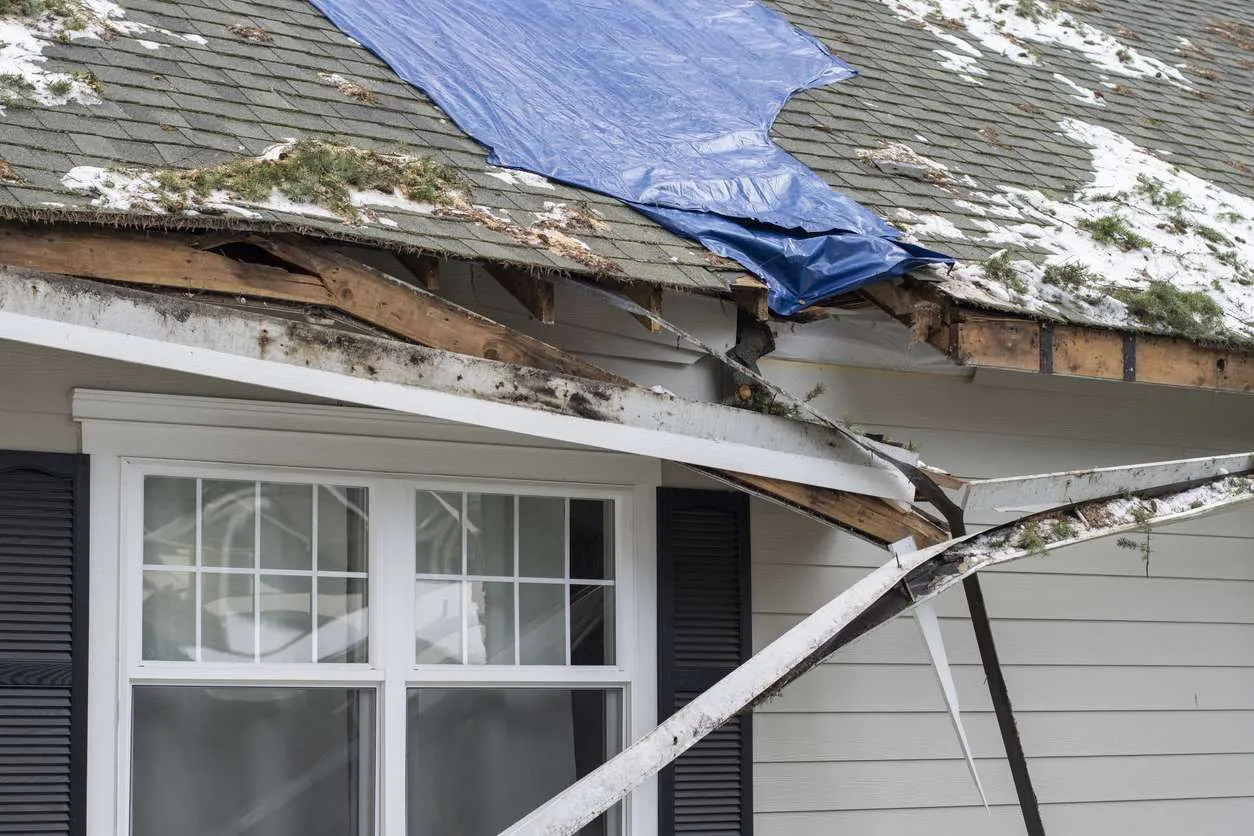
If a whole section of shingles is missing or you can see the wood decking from the ground, get a professional tarp on the roof as quickly as safely possible. Keep every receipt – tarps, buckets, plastic sheeting, dehumidifier rental. Many policies reimburse reasonable emergency mitigation costs, so check what yours covers. When in doubt, call a trusted local Bergen County roofing contractor and ask for an emergency tarp visit. It protects the interior of your home and documents the steps you took to limit the damage.
Step 4: Understand What Your Policy Covers in a Roof Damage Insurance Claim
Many homeowners have an HO-3 policy, but coverage, endorsements and exclusions differ from one carrier and one policy to the next, so do not assume your roof claim will be covered or paid the same way as a neighbor’s. Damage from wind, hail or a falling tree limb is often covered, subject to the terms of your policy. Three details on your declarations page and endorsements usually matter most:
- Deductible. Deductibles vary by policy. Some policies also have a separate wind or hurricane deductible calculated as a percentage of the dwelling coverage, which can be much larger than a flat deductible. Check the exact amounts on your declarations page.
- Replacement Cost vs. Actual Cash Value. Replacement Cost (RCV) pays what it costs to install a new roof today. Actual Cash Value (ACV) subtracts depreciation based on the roof’s age. On an older roof, an ACV payment can be well below the cost of a new roof.
- Roof age or cosmetic exclusions. Some carriers add endorsements that limit coverage on older roofs or exclude cosmetic hail damage. Read the endorsements section, not just the summary.
Pull out your policy or log into your carrier’s portal before you call. Knowing your deductible and coverage type up front means you will not be blindsided by the numbers later.
Step 5: File the Claim Within Your Carrier’s Reporting Window
Reporting requirements and time limits are set by each policy, so read yours for the notice it requires and any deadline for filing a claim or a lawsuit. Late notice can complicate a claim, so report the damage as soon as you reasonably can, even if you are not sure yet how bad it is.
When you call the claims line, keep it factual: the date and approximate time of the storm, what you observed, what you have already done to prevent further damage, and where the visible damage is. Ask for your claim number in writing, the name and direct contact for the adjuster assigned, and a copy of any recorded statement. Write down every conversation with a date and time. If anything is ever disputed later, that log is worth its weight in gold.
Step 6: Meet the Adjuster With a Roofing Contractor at Your Side
The adjuster’s job is to represent the insurance company. That does not make them the villain – most are honest professionals – but they are estimating from the carrier’s perspective, using the carrier’s software, and may have limited time on a roof they have never seen before. A reputable local roofing contractor can take a closer look, point out damage that may have been missed, and speak the same technical language when there is a disagreement.
Schedule the adjuster’s inspection at a time your contractor can also be there. On the day of, walk the property together. Point out what you photographed. Ask the adjuster to physically inspect the attic, the gutters, and any interior water damage – not just the roof surface. If shingles are creased from wind uplift but not visibly torn, make sure that is documented; creased shingles may have lost their seal and can fail sooner. If your gutters or downspouts are dented or pulled loose, that goes in the estimate too. So does damaged flashing, ridge vents, drip edge, and any interior finishes affected by leaks.
Step 7: Get a Legitimate Estimate and Choose Your Contractor Carefully
After a big storm, contractors you have never worked with may knock on doors or leave flyers offering inspections and help with the insurance process. A knock on the door or a free inspection is not a warning sign by itself; Nuvista offers free inspections too. What matters is how the contractor does business, because a few will inflate damage, cut corners or leave before the work is finished.
Warning signs worth taking seriously:
- Pressure to sign right away, such as a same-day discount or a contract pushed on you before you have had time to compare estimates.
- Unclear pricing or scope: no written, itemized estimate showing the work, the materials, the price and the payment schedule.
- A request to sign an Assignment of Benefits (AOB) or “contingency agreement” before you have an estimate or itemized scope of work. An AOB hands your claim over to the contractor – once you sign, you may lose control of it.
- Offers to “waive” or “eat” your deductible. That can amount to insurance fraud, and it tells you how the contractor does business.
- No verifiable New Jersey Home Improvement Contractor (HIC) registration or certificate of insurance. You can look up any contractor’s registration status on the New Jersey Division of Consumer Affairs website at njconsumeraffairs.gov.
A trustworthy contractor gives you a written, itemized estimate, walks you through the scope, provides proof of licensing and insurance, and never rushes you to sign. Get one or two estimates from established local companies before deciding. If you are unsure who to trust, start with a company that has real reviews, a physical Bergen or Rockland County presence, and a track record you can verify.
If Your Claim Is Denied or Underpaid
Denials happen. So do lowball offers that would not cover a proper replacement. If the adjuster’s number does not match reality, you have options – and none require immediately hiring a public adjuster or an attorney.
Start by requesting a written explanation of the denial or the estimate breakdown. Compare it line by line against your contractor’s estimate. If items are missing (drip edge, ice-and-water shield to code, ventilation, permit fees), submit a written supplement request through your adjuster with your contractor’s documentation attached. Many disputes are resolved at this stage.
If the carrier will not budge, your next step in New Jersey is the Department of Banking and Insurance. They handle consumer complaints against homeowner’s insurers and can investigate claims that appear to be handled in bad faith. You can file a complaint or ask questions through the department’s consumer resources at state.nj.us/dobi. Filing a complaint is free, and it can help move a stalled claim forward.
The Bergen County Storm Reality
Bergen County sees a specific mix of severe weather every year: nor’easters in fall and spring, summer thunderstorms with damaging straight-line winds, occasional hail across Fair Lawn and Ridgewood, and the odd tropical system pushing up the coast. Homes on higher, more exposed ground can take stronger gusts; older housing stock in Hackensack, Teaneck, and Englewood is more likely to have aging roofs that fail in ways newer construction does not. Knowing your policy inside out before the next storm is the single best thing you can do for your home.
For a proactive look at how to protect your roof before the next system, see our guide to preparing your Bergen County roof for storm season. If you would rather talk to a real person about damage right now, Nuvista Designs General Contractors has a team that has handled roofing, gutters, siding, and masonry across Bergen and Rockland County since 2013. We are happy to walk your property, meet the adjuster with you, and give you a straight answer – claim or no claim.